Material
Bog Oak Sculptures
Bog oak is from the species of oak tree that once fell, or was felled, into Irish wetland and was preserved from total decay by the unique physical environment. Held under peat and layers of vegetation, starved of oxygen, it darkens slowly instead of rotting.
RUIN works this and other types of bog wood recovered, pieces willing to tell a story.
What bog wood is
Peat bogs are acidic and almost airless. Wood buried in them is preserved rather than consumed, and tannins in the wood react with iron and minerals in the ground. In the case of oak this can often make the grain turn from brown to near black.
Recovered bog wood arrives wet, caked in earth with much of it being unstable. It is dried patiently over months before it can be worked at all. Much of it splits, cleaves off and is lost. What survives is scraped, almost like dentistry, cleaning cavities before it holds a finish. This happens in phases of cleaning and drying.
Time, decay and preservation
Bog oak and bog wood in general occupies an odd position between decay and preservation. It is the residue of a collapse — a forest that fell and was swallowed — kept intact by the same conditions that should have destroyed it.
RUIN treats that condition as the subject rather than the raw material. Splits, voids and mineral staining are celebrated.
RUINS Bog oak and bog wood
Each Discovery is one of one. The wood dictates the form: a piece is found and brought to the workshop where it is examined for form. Much time is spent cleaning, stripping away the earth and rotten wood, soft pieces to find what remains, what is stable and to review form. It is finished working around the voids and grain, no two discoveries behave the same way.
Where dating is recorded it is stated exactly as it is known — confirmed, estimated, or undetermined — and never rounded upward for effect.
Bog Wood Discoveries
Public Discoveries worked in bog oak and other wood recovered from Irish bog.
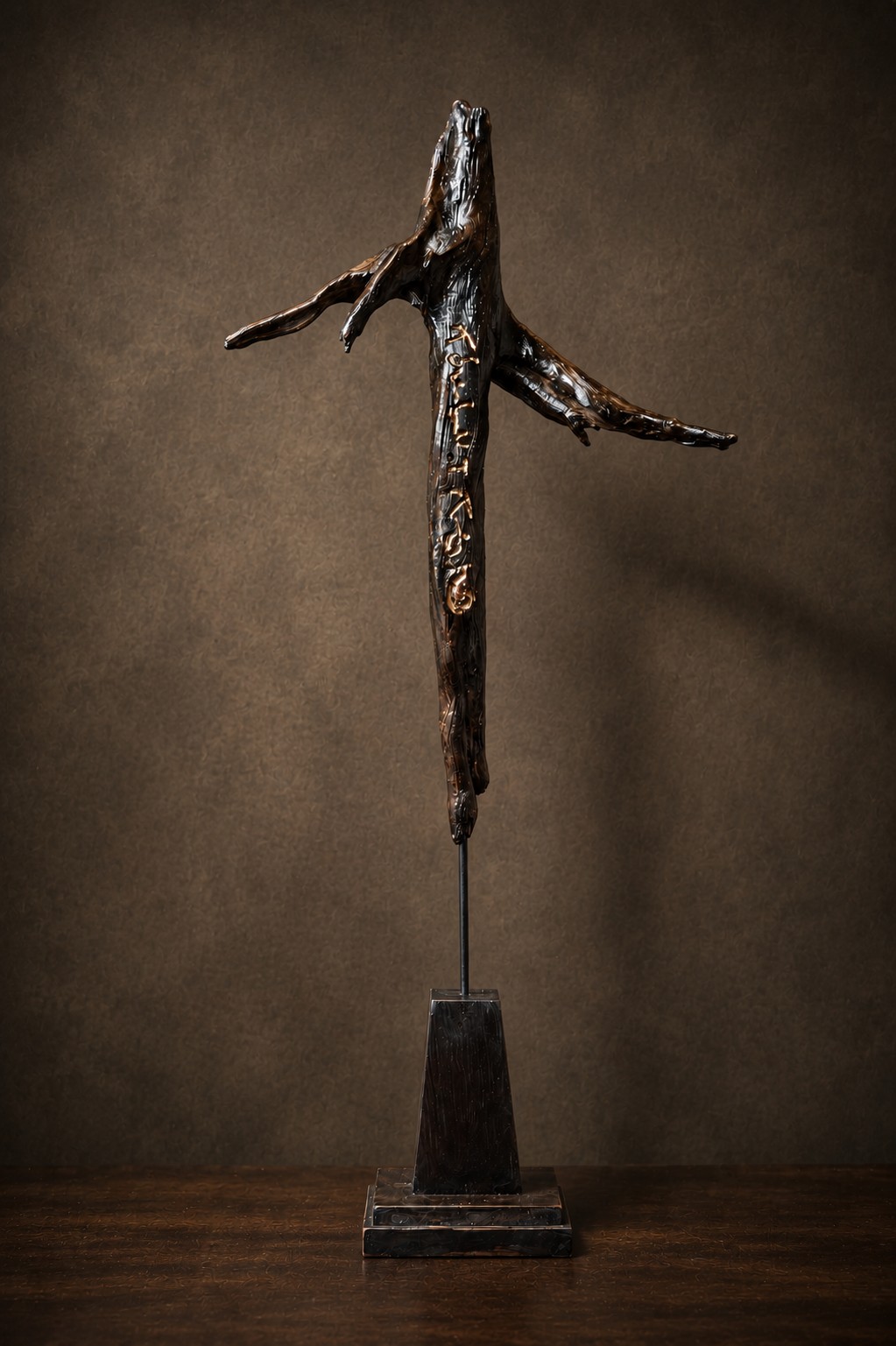
Ifreann's Key
Irish bog Scots pine, approximately 400–4,000 years old
Ifreann’s Key is a sculpture inspired by dark pagan rituals and ancient beliefs of druids and shamans. Its fractured, glistening…
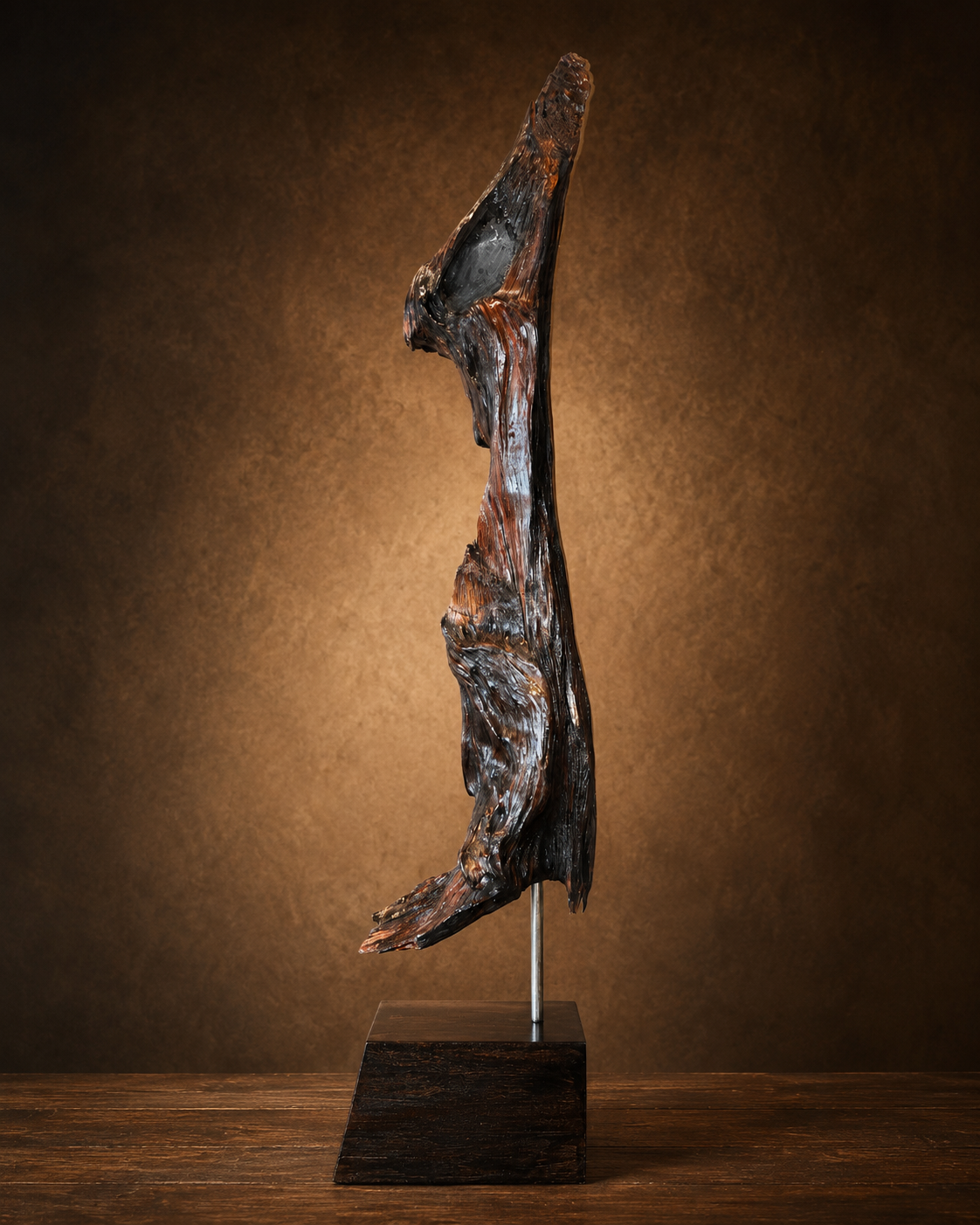
Coinins Stand
Irish bog Scots pine, 400–4,000 year old bog wood
Coinin, Irish word for a rabbit is formed from ancient Irish bog wood recovered from the blanket bog landscape of Donegal. Hidden…
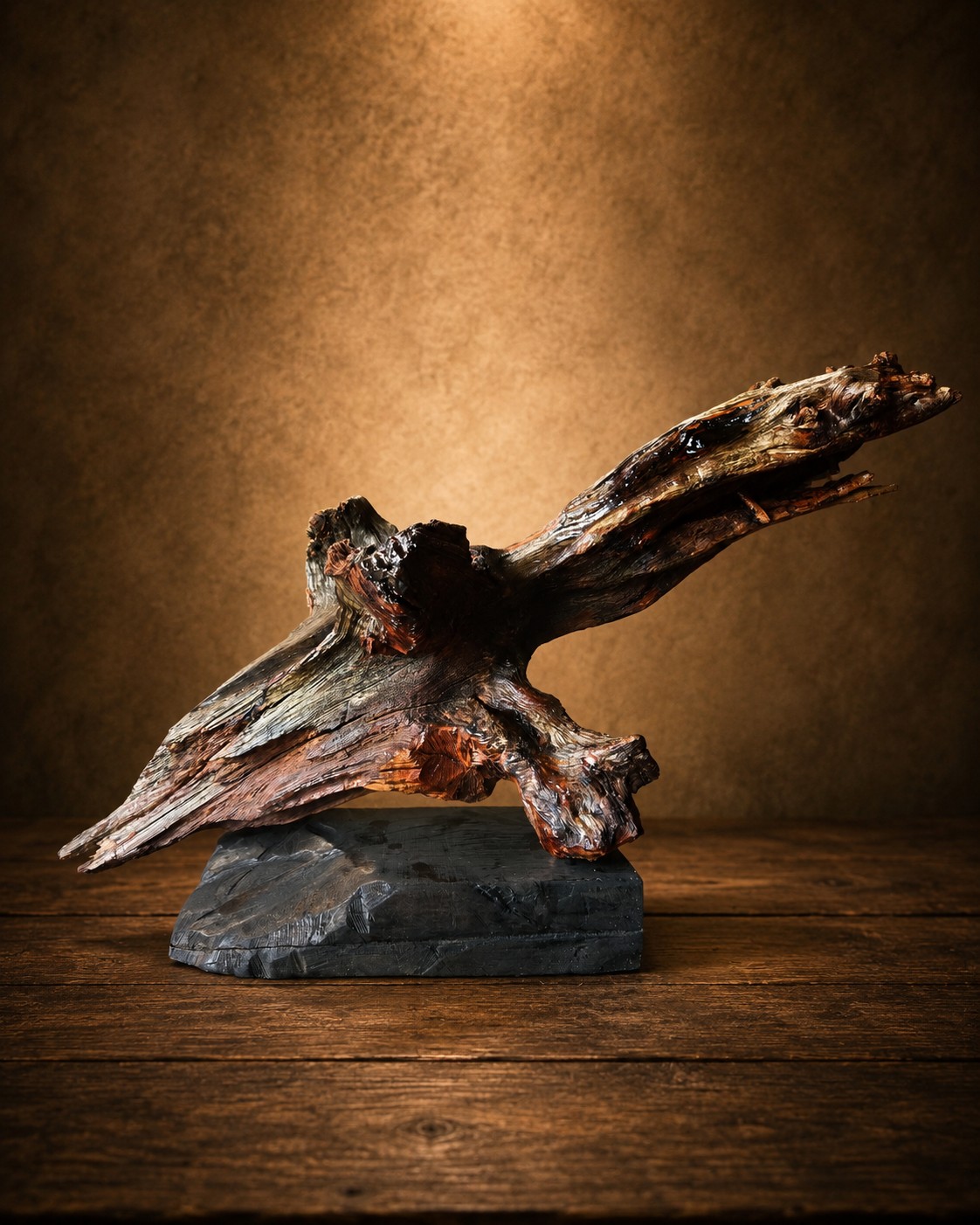
Lamhacan
Scots pine bog wood, 400–4,000 years old
Lamhacan is a animalistic contemporary sculpture inspired by one of the great transitions in the history of life: the first…
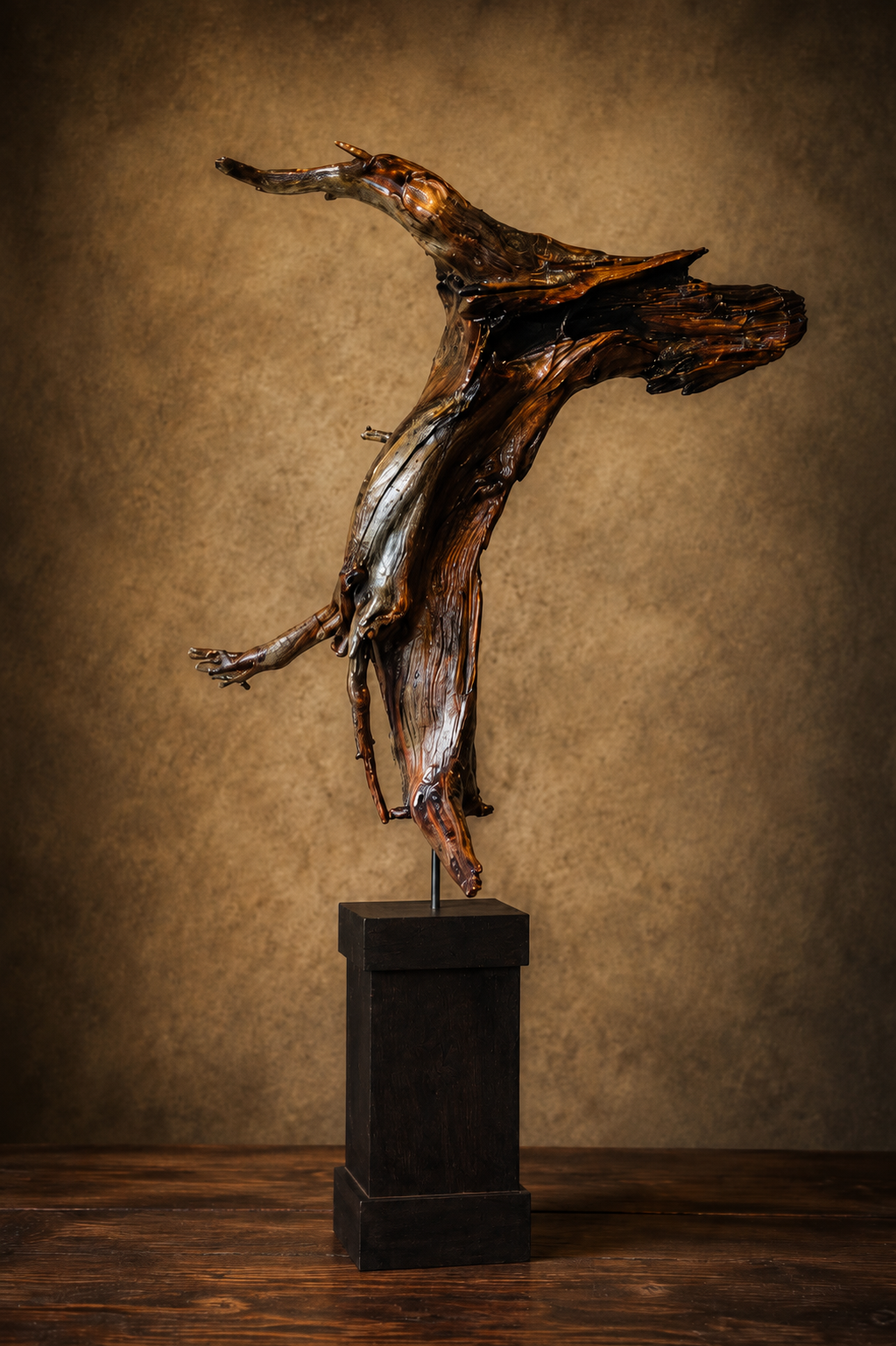
Deer Hunted
Bog Scots Pine , 400 - 4,000 years old
Deer Hunted is a bog wood sculpture that remembers an older Ireland and the great animals that once moved through its ancient…
Enquiries about bog oak work, including commissions, are answered personally by the studio.