
Contemporary Dark Wood Sculptures, weathered by time and nature
Discoveries curated.
RUIN finds and reveals a collection of one-of-one pieces recovered from Irish boglands and places of ruin. Each is cleaned, worked, scraped, conserved and catalogued before being presented for release.
Behind the collection are the benches, the machines, the material and the landscapes from which these pieces emerged. What follows is the slow work of bringing each Discovery back into the light, revealing what has survived and giving form once more to something that had lain dormant for centuries.
The Workshop
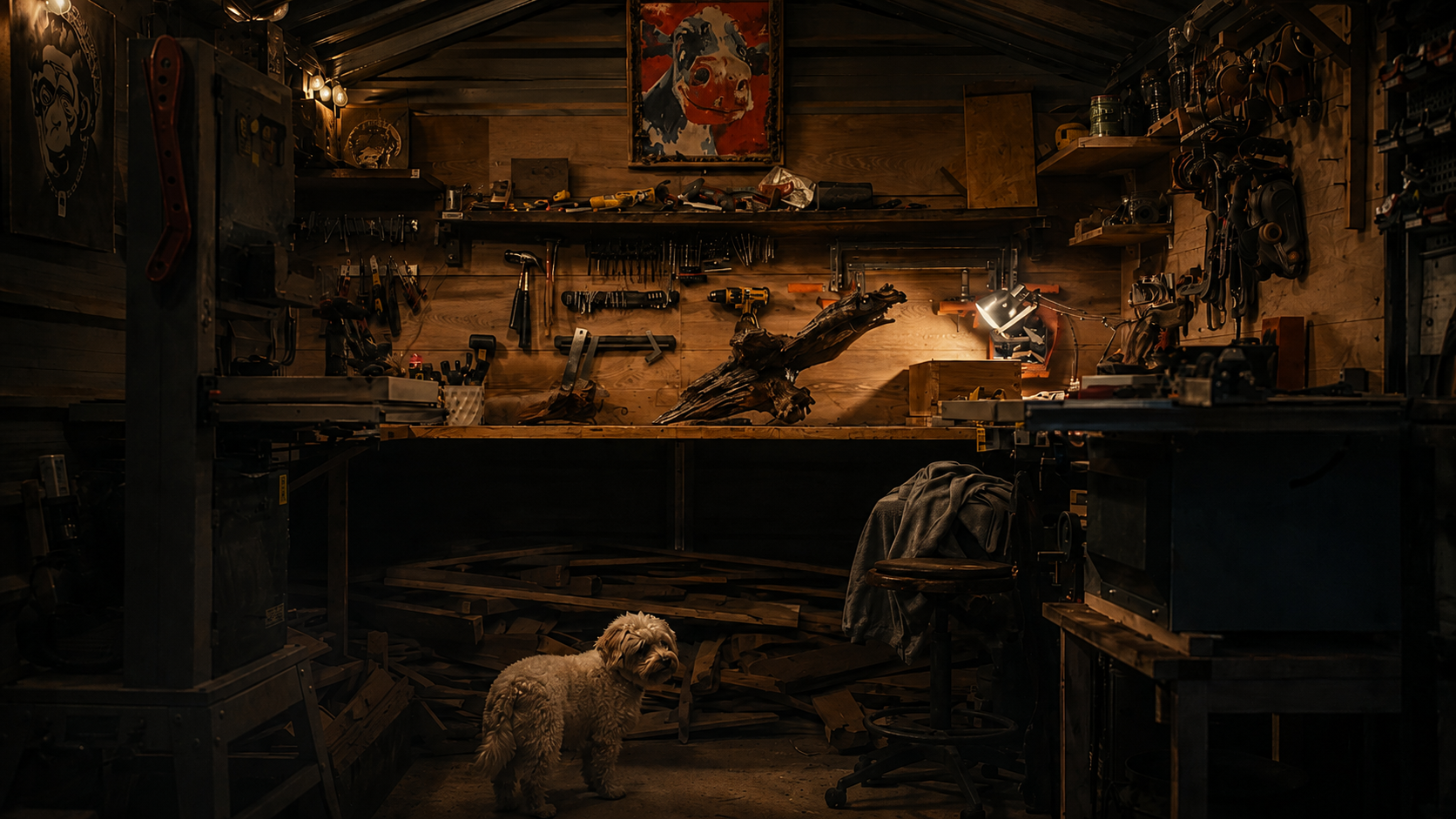
The Workshop is a dedicated room of wood, dust and tools. A bench, vice and sharp chisels do most of the work; machinery is used sparingly. Ancient bog wood, reclaimed wood and weathered wood are cut, carved, burned and worked largely by hand until the form begins to emerge.
The Discoveries are first held here for months. The wood dries, shifts, splits and settles. Nothing is hurried toward completion. Much of the work is waiting, watching and allowing the material to reveal what time, decay and pressure have already begun. The sculpture is not imposed on the wood so much as uncovered.
The Material
RUIN works with ancient Irish bog wood from native species including Scots pine and oak, alongside reclaimed and weathered wood recovered from abandoned buildings and structures already fallen into ruin. Each piece carries a history before it ever reaches the workshop, marked by landscape, exposure, decay and previous use.
Age is stated cautiously and only where the evidence supports it. For now, most bog wood is given an estimated range. Where scientific dating is carried out, the method will be recorded alongside the Discovery. Radiocarbon dating is planned for selected pieces. Based on the material currently recovered, RUIN works with bog wood ranging from roughly 400 years old to as much as 4,000 years old.
Other materials are introduced only where they serve the form. Exotic hardwoods including padauk, zebrawood and purpleheart are used for their natural colour, contrast and strength. Danish oil and beeswax are favoured for the depth they bring to the grain and for the protection they offer the wood. Stone, steel, resin and pigments are used sparingly. The wood remains the main event.
The Bog
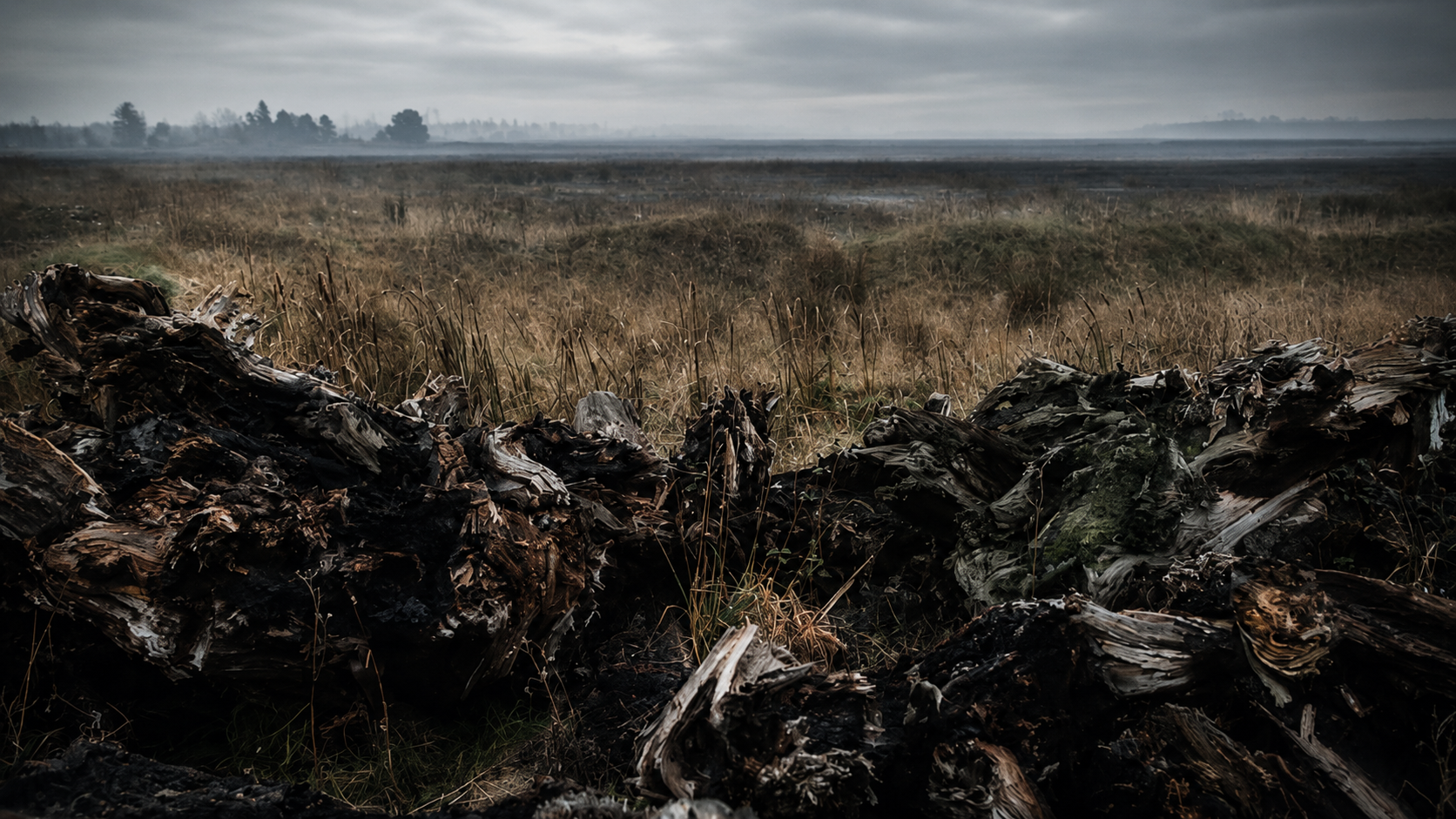
Ireland’s is famous for its unique blanket bog land. Layer upon layer of decayed wood built up over thousands of years in cold, waterlogged ground, preserved. Blanket bog began to spread across much of the Irish landscape around 4,000 years ago. Cool. Wet. Relentless. Ireland and Britain still contain a significant share of Europe’s surviving blanket bog. Human activity helped shape that landscape. Woodland was cleared and the ground became wetter. Decay slowed. At Céide Fields in County Mayo, Neolithic field systems around 5,000 years old now lie beneath metres of peat. Later woodland clearance exposed more of the land to bog formation. The bog preserved what the surface lost, giving us fragments of long since vanished environments. Bog wood can remain buried for centuries or millennia. Cold, wet and starved of oxygen, it is protected from normal decay. When recovered, it displays wonderful features which lean naturally toward the dark and macabre, twisted and tortured.
The Process
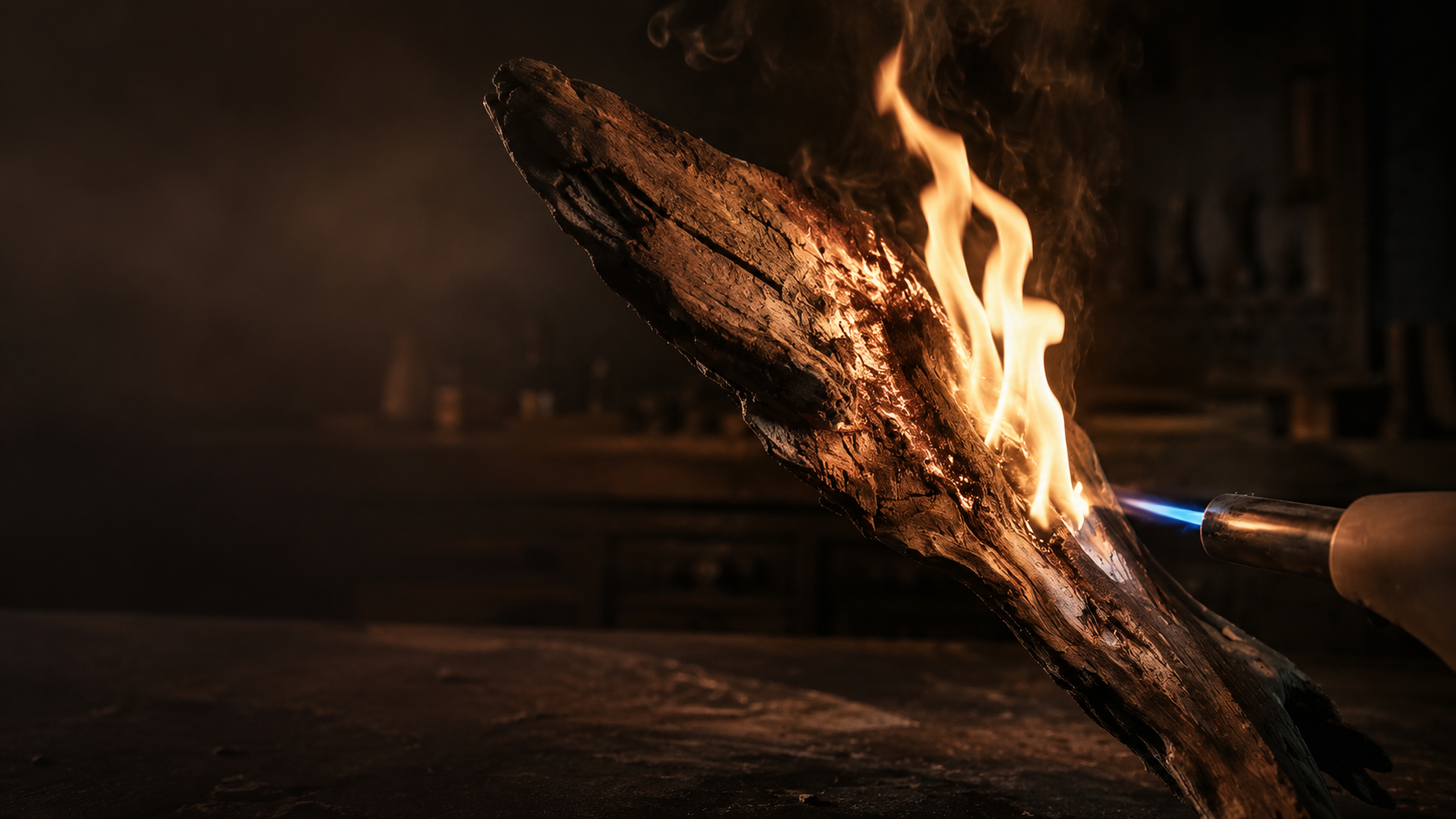
Recovery is unceremonious: wet, heavy, black earth clinging. Much is lost in the curing and cleaning. What remains becomes the discovery. Cleaning, scraping, burning, oiling, waxing - all turns each discovery into what you see. Resin is used for stabilising voids or bringing character, or both. Steel when a work needs to stand once more. The cleaning is like dentistry, probing and looking for cavities, scraping away what is weak to reveal the discovery's form. It decides.
Roughness is kept. Splits, checks, insect track and mineral staining are left legible rather than sanded away — the damage is the record, the ruin is the beauty and removing it would remove its story.
In progress
In the Making
An occasional glimpse of work not yet catalogued.
Serpent
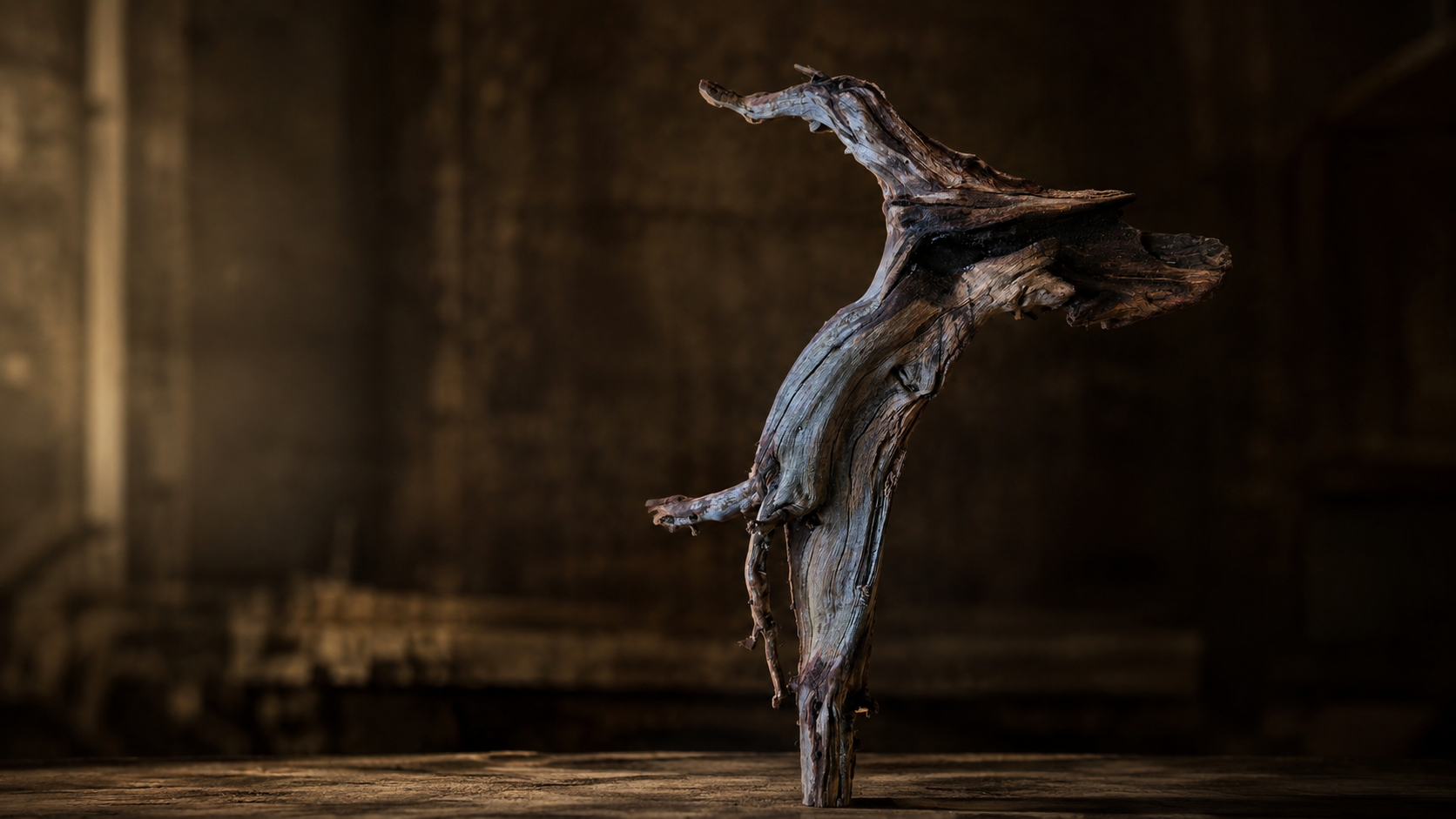
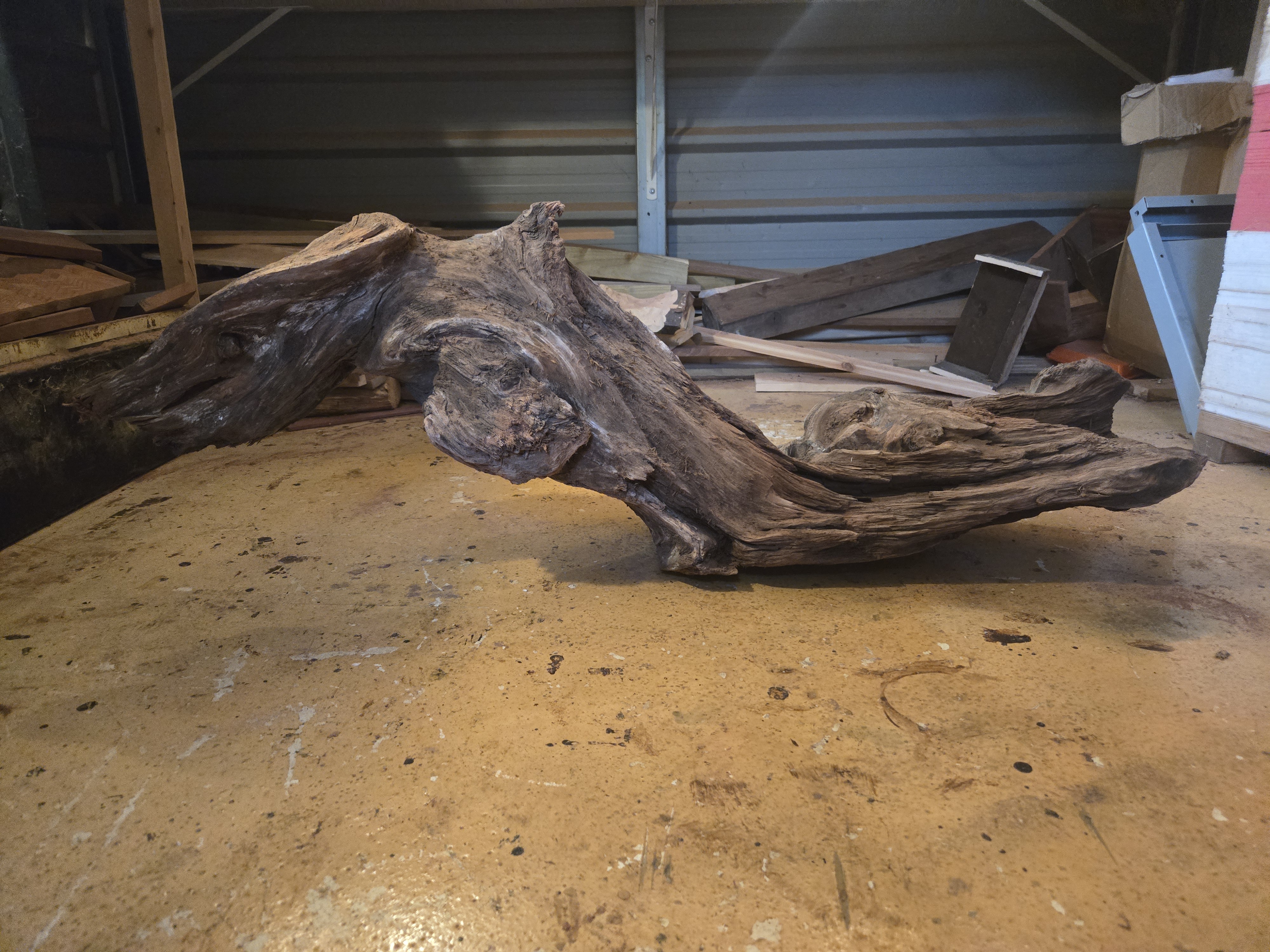
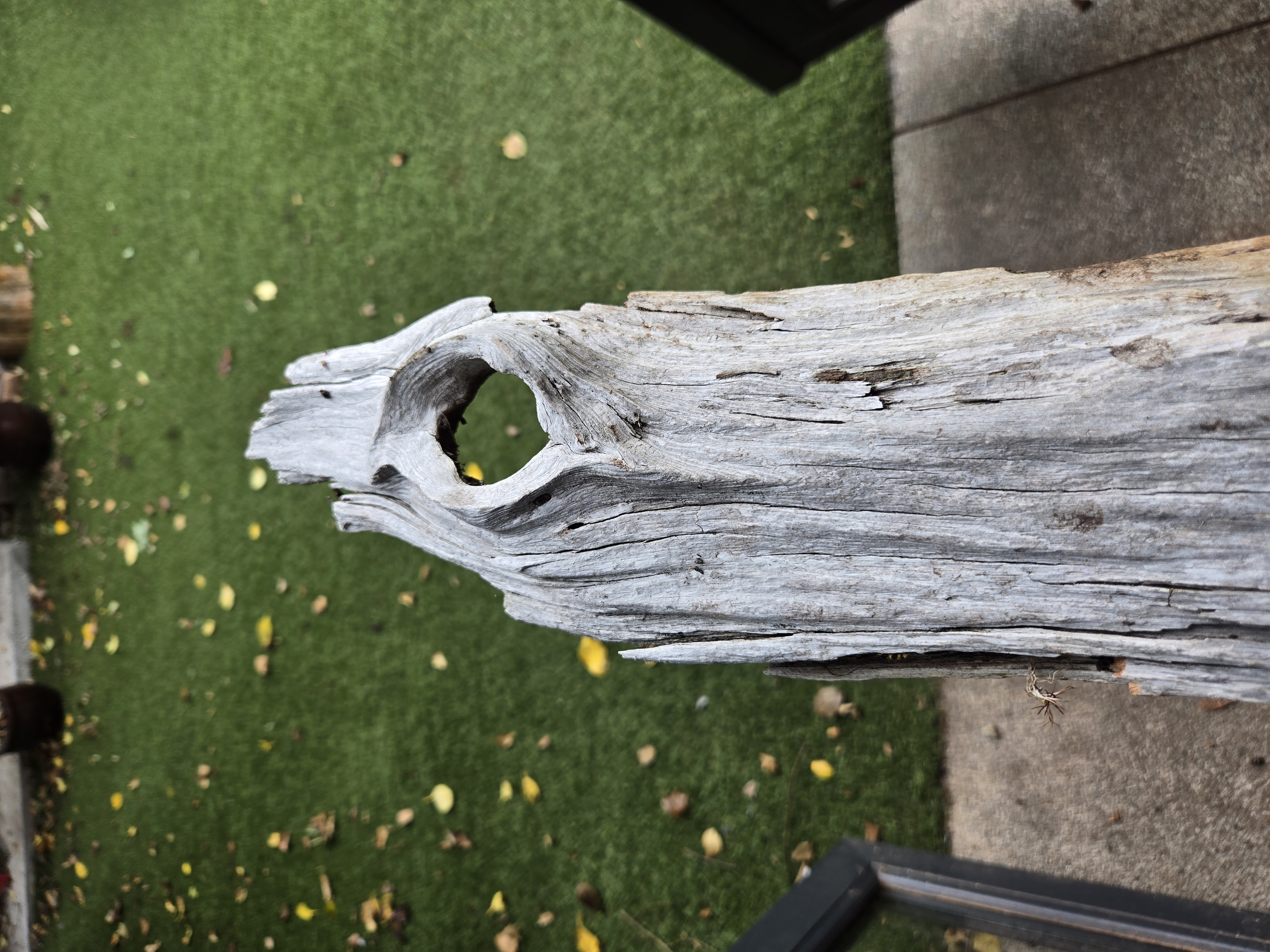
A root section lifted last winter, 5 months into drying. I see a serpent from the depths of time and ocean arising. A piece of bog wood with a ghostly look and a hole - Souls Eye
Curator Access
The catalogue is maintained privately.
CMS